

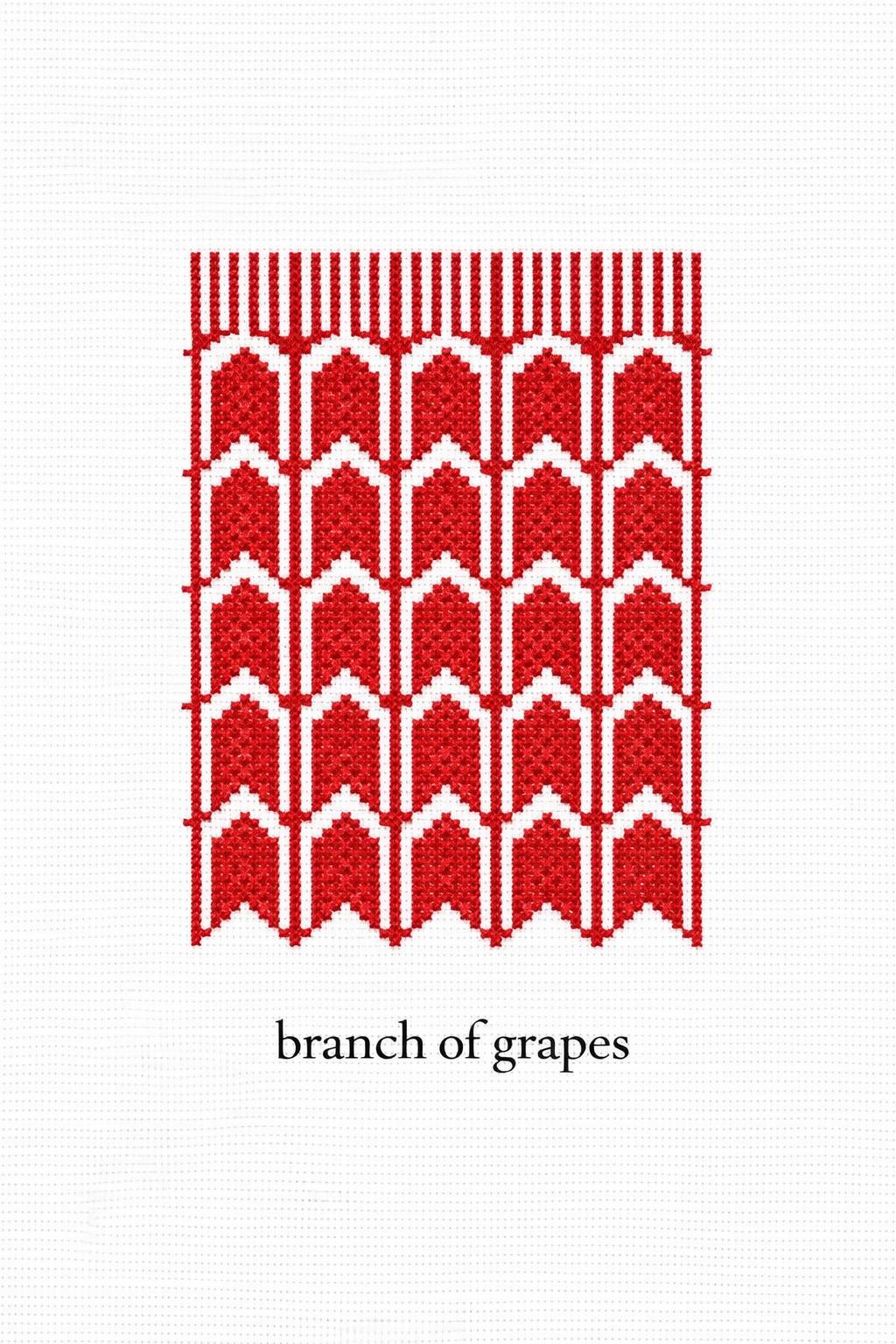
The Grape Branch Motif is a plant-inspired design in Palestinian Tatreez embroidery. Moreover, it reflects the agricultural heritage of Palestine and the long relationship between embroidery and cultivated land. Through cross-stitch, embroiderers transformed branches and leaves into balanced geometric forms.
Symbol of Growth and Cultivation
In Palestinian embroidery, plant motifs often symbolize growth, fertility, and the continuity of life. The grape branch represents cultivated land and the agricultural cycles that supported village economies.
Because grape farming was central to many rural communities, the motif became a visual reference to prosperity and the productivity of the land.
Connection to the Palestinian Landscape
The Grape Branch Motif reflects the close relationship between Tatreez embroidery and the rural landscape of Palestine. In southern Palestine, especially in Hebron, vineyards have long shaped the local environment and culture.
Therefore, grape-related motifs appear frequently in embroidery traditions from the region. To place this motif within the wider history of dress, readers can explore Palestinian thobes by region and compare local embroidery traditions across Palestine.


Geometric Structure in Cross-Stitch
Like most Tatreez patterns, the Grape Branch Motif is created through cross-stitch, which turns natural forms into structured geometric arrangements. As a result, the motif suggests branches and leaves while preserving balance and repetition across the fabric.
See the map of Palestinian thobes by region
See where each Palestinian thobe originates across the regions of Palestine.
Open the Map