

Symbolism and Meaning
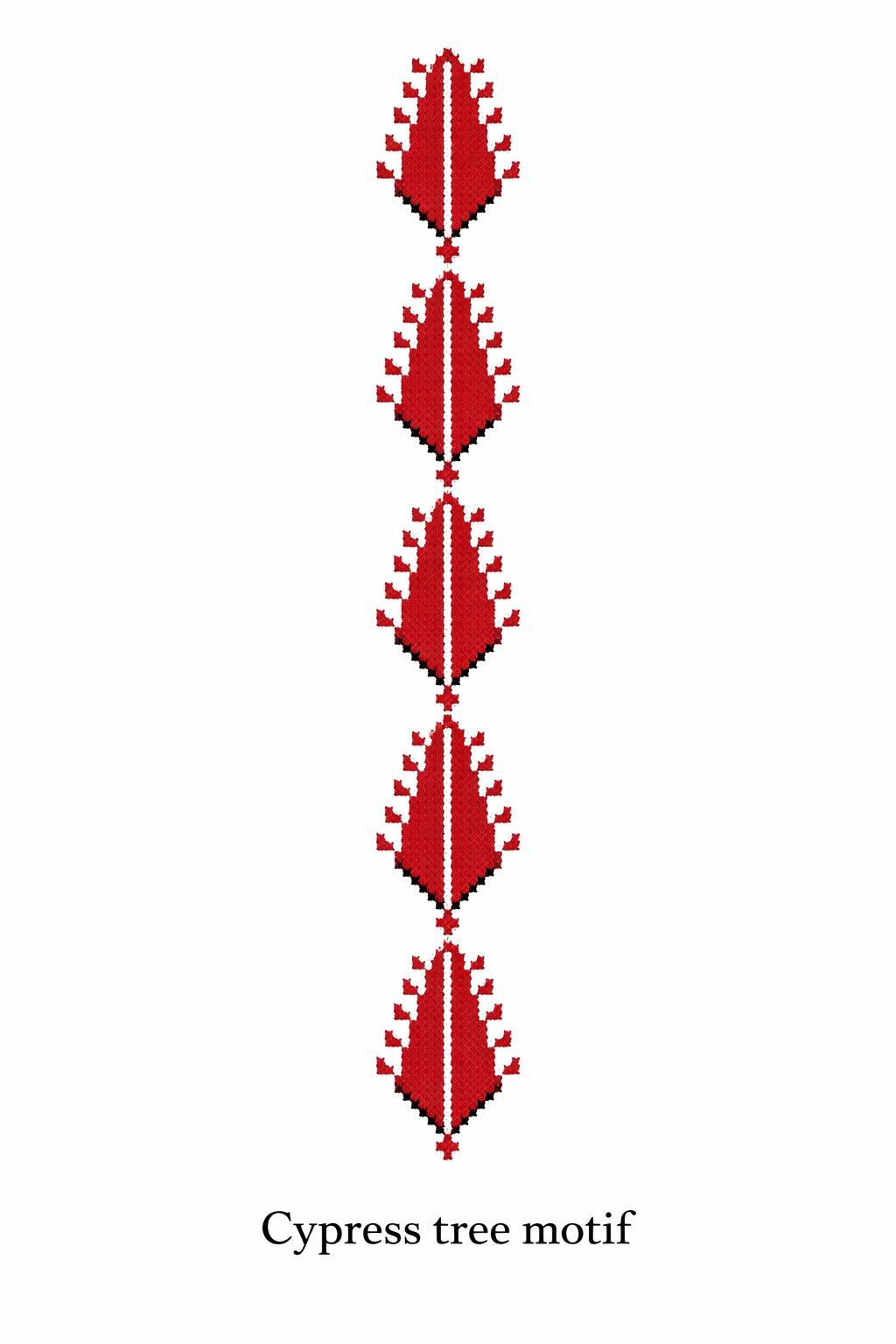
In Palestinian culture, the olive branch is widely associated with peace, resilience, and connection to the land. Within the visual language of Palestinian Tatreez, the olive branch motif reflects a lasting relationship between heritage, landscape, and textile tradition, forming part of the enduring identity of Palestinian embroidery.
As a recurring botanical element in Palestinian dress, the motif also connects embroidered design to the agricultural life of the region. Its repeated form across the Palestinian thobe highlights how Tatreez transforms familiar natural symbols into enduring patterns of cultural memory and regional expression. To see how embroidery traditions vary across local dress culture, readers can explore Palestinian thobes by region.


Cultural and Historical Context
The olive tree has long been one of the most powerful symbols of Palestinian life, shaping the agricultural landscape and cultural traditions of the region for centuries. Because of this deep connection, the olive branch motif frequently appears in Palestinian Tatreez embroidery, particularly on the embroidered panels of the traditional Palestinian thobe.
Through repeated cross-stitch patterns, Palestinian embroiderers transform the familiar form of the olive branch into a lasting decorative element that reflects the relationship between Palestinian heritage, rural life, and traditional textile craftsmanship.
See the map of Palestinian thobes by region
See where each Palestinian thobe originates across the regions of Palestine.
Open the Map