

Eye of the Camel motif is a distinctive symbolic design in Palestinian Tatreez embroidery. Moreover, it reflects naming traditions that helped Palestinian women preserve and transmit stitched knowledge across generations. In addition, some embroidery references associate the motif with the Bir Saba’ (Beersheba) region, which highlights the rich regional diversity of Palestinian embroidery traditions.
Eye of the Camel motif meaning and regional tradition
Like many Palestinian embroidery motifs, the name does not necessarily describe a literal image. Instead, it functions as a traditional identifier used by embroiderers to name, remember, and teach geometric patterns through practice and oral transmission.
This naming system is an important part of Tatreez culture. Therefore, motifs could carry memory and regional meaning even when the stitched design itself remained abstract. To understand how such motifs connect to traditional dress across Palestine, readers can explore Palestinian thobes by region and see how embroidery vocabulary developed across Beersheba, Hebron, Bethlehem, Gaza, and other areas.
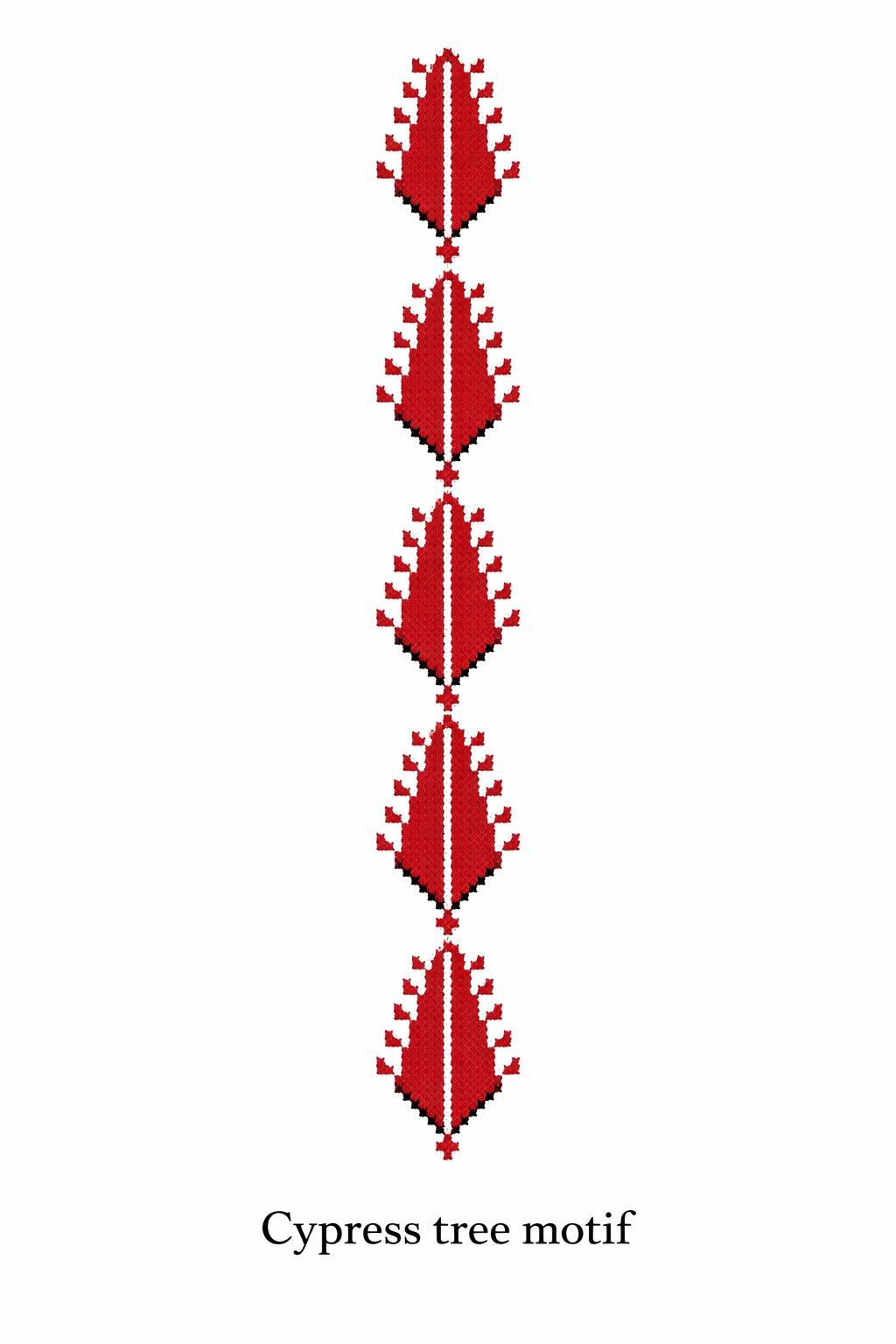


Symbolism of the Eye of the Camel motif
In Palestinian Tatreez, motif names often reflect the natural environment, animals, plants, agricultural life, and elements of daily experience. The Eye of the Camel motif is commonly interpreted in relation to the camel, an animal historically associated with endurance, travel, and survival in desert landscapes.
Because of this association, the motif can suggest strength, resilience, perseverance, and memory. In the cultural landscape of southern Palestine, these meanings align with the historical environment of desert mobility, Bedouin life, and regional textile traditions connected to Bir Saba’ and the wider Naqab area.
Eye of the Camel motif in Palestinian Tatreez
More broadly, Tatreez, the traditional Palestinian embroidery practice, has been stitched by hand for centuries. Women embroidered garments such as the Palestinian thobe using counted-thread and cross-stitch techniques on cotton, linen, wool, and other woven fabrics.
According to UNESCO, Palestinian embroidery carried strong social and regional meanings. In many cases, specific motifs, compositions, and color combinations reflected identity, locality, and cultural belonging. Therefore, the Eye of the Camel motif belongs to a wider system of visual storytelling that connected clothing with memory, place, and inherited knowledge.
See the map of Palestinian thobes by region
Explore where each Palestinian thobe originates and discover how embroidery traditions vary across the regions of Palestine.
Open the Map