

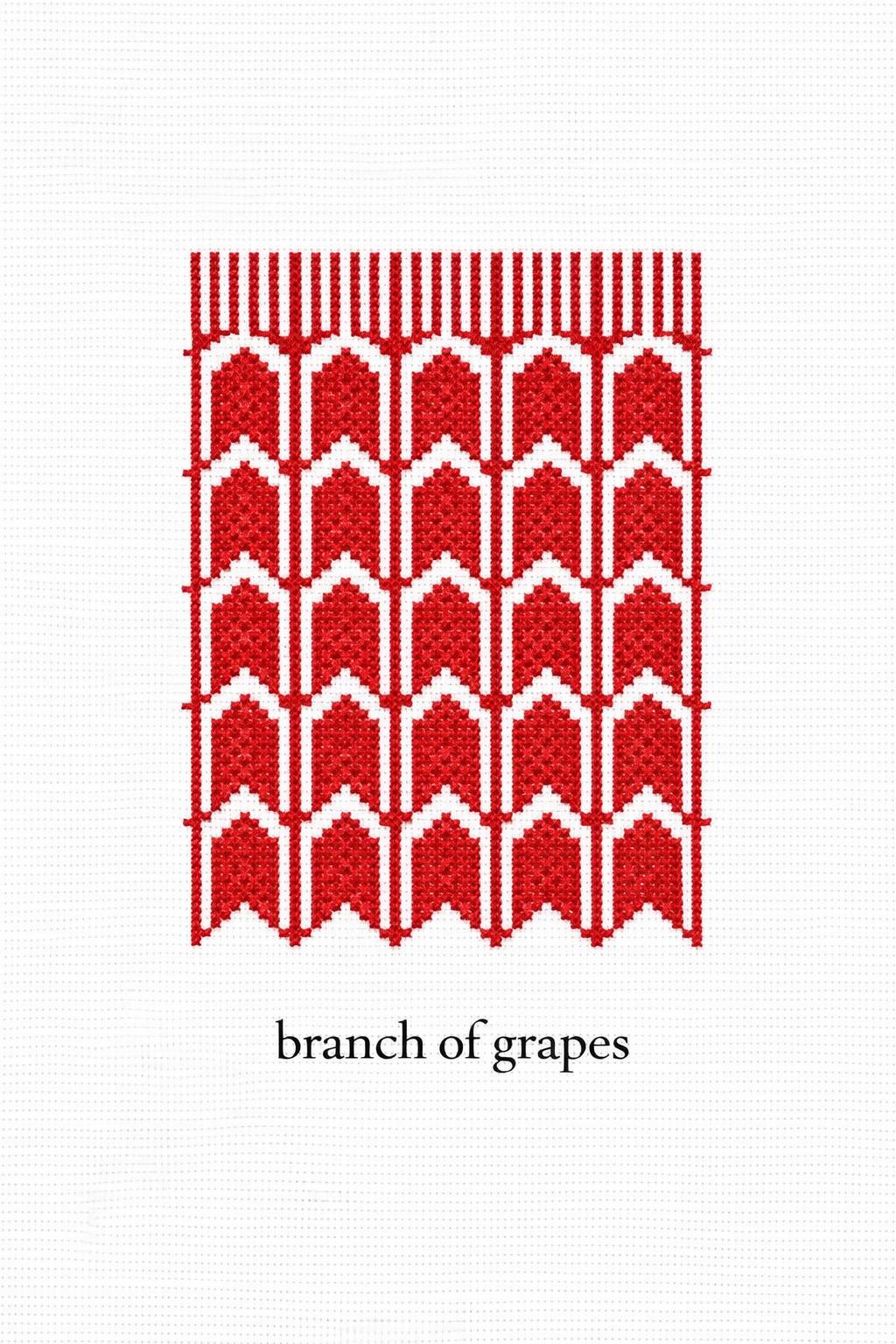
The Ears of Corn Motif in Palestinian Tatreez is a traditional agricultural embroidery pattern. Moreover, it reflects harvest, abundance, and the connection between Palestinian embroidery and rural life.
Ears of Corn Motif in Palestinian Tatreez Meaning
The meaning of this motif is closely tied to fertility, abundance, and harvest. Corn- and grain-like forms in traditional textile cultures often symbolize growth, nourishment, and the continuity of life through the agricultural cycle.
In the Palestinian context, this motif reflects how embroidery drew from the visual world surrounding women’s daily lives. Fields, crops, and seasonal labor were part of the same environment that shaped the language of Tatreez.
Visual Function in the Thobe
In embroidered compositions, the Ears of Corn Motif works well as a repeating linear form. Its structure makes it suitable for vertical bands, borders, and repeated strips, where it creates rhythm while also suggesting the upright form of grain or harvest stems.
Therefore, the design has both a decorative and structural role inside the Palestinian thobe. To better understand how this motif relates to regional dress traditions, readers can explore Palestinian thobes by region.


Cultural Context
The motif reflects one of the clearest features of traditional Palestinian embroidery: its connection to the natural and agricultural world. In this way, the Ears of Corn Motif points to the central place of land, food, and seasonal work in Palestinian cultural life.
Explore the Map of Traditional Palestinian Thobes
See where each Palestinian thobe originates across the regions of Palestine.
Open the Map