
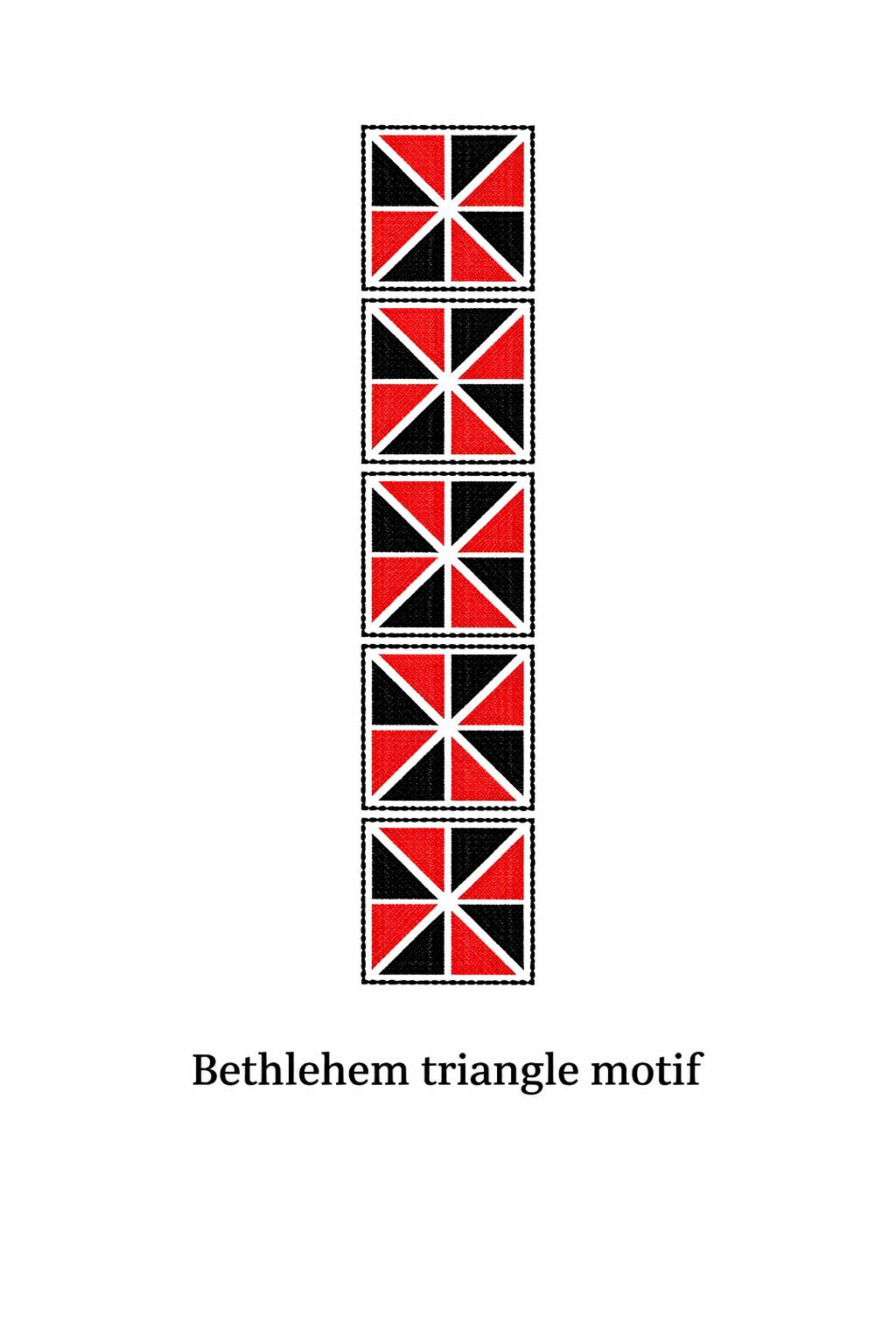
Bethlehem Triangle Motif in Palestinian Tatreez Embroidery is a geometric design in Palestinian Tatreez embroidery that reflects the regional character of Bethlehem and the structured beauty of traditional Palestinian dress. In Palestinian embroidery traditions, geometric forms are more than decorative patterns. They are part of a visual language shaped by women’s craftsmanship, regional identity, and long-standing textile heritage across central Palestine.
History of the Bethlehem Triangle Motif
In Palestinian embroidery traditions, triangular forms are frequently interpreted as symbols of protection, stability, and structural harmony. Their sharp geometry and directional orientation create a sense of strength within the embroidered composition, reinforcing the visual order characteristic of many Tatreez patterns.
In regional embroidery traditions, particularly those associated with Bethlehem, triangular motifs helped organize complex decorative layouts across the embroidered panels of the Palestinian thobe, where geometry and repetition formed an essential part of the garment’s visual identity. To place this motif within the broader history of Palestinian dress, readers can explore Palestinian thobes by region and compare how local embroidery traditions developed across Bethlehem and other regions of Palestine.


Cultural Continuity
When understood within the broader history of Palestinian Tatreez, the Bethlehem Triangle Motif represents the meeting of geometric design, cultural memory, and regional heritage. It forms part of the enduring artistic language of traditional Palestinian embroidery and shows how repeated forms preserved both beauty and identity across generations.
See the map of Palestinian thobes by region
See where each Palestinian thobe originates across the regions of Palestine.
Open the Map