
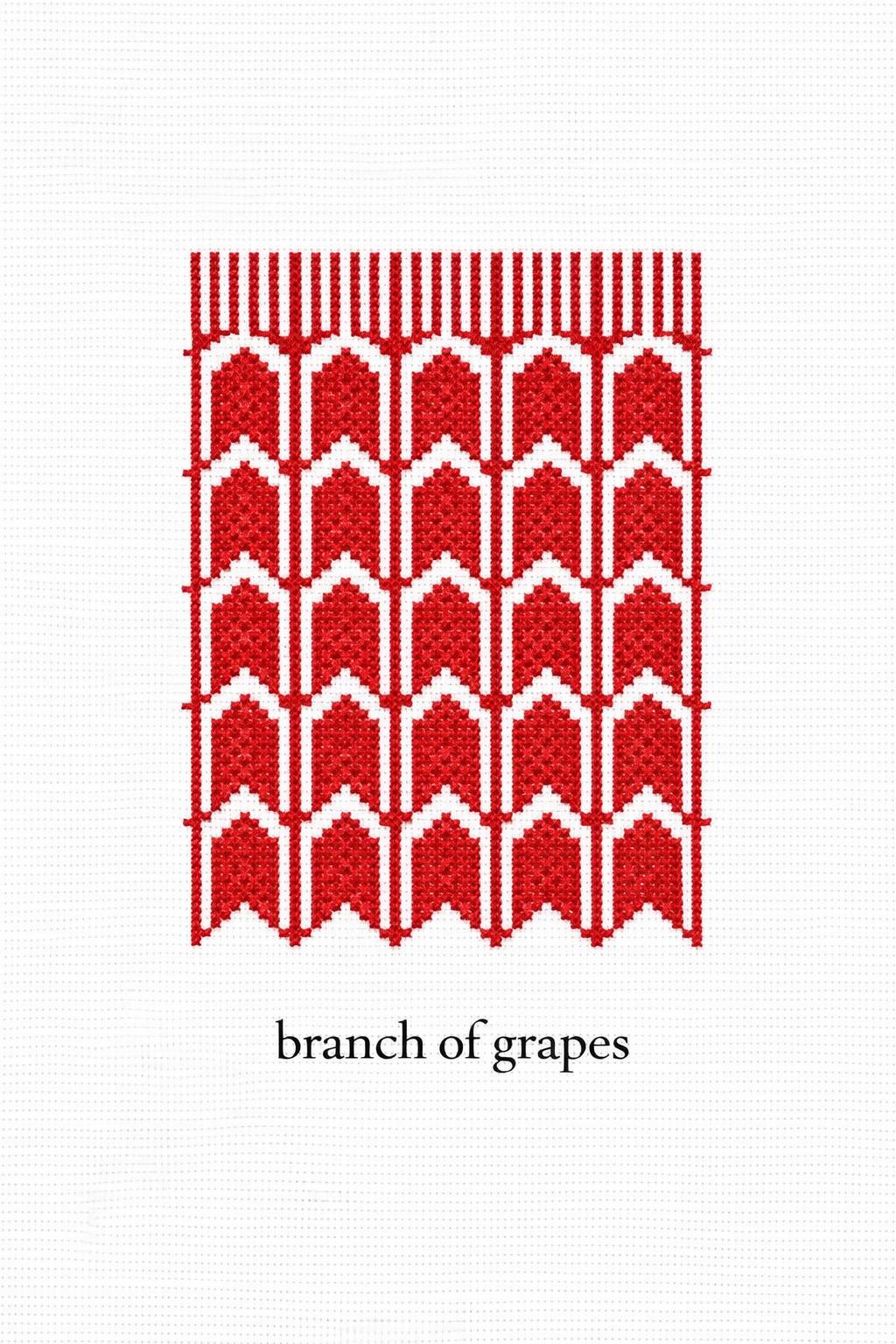
The Grape Cluster Motif is a well-known design in Palestinian Tatreez embroidery. Inspired by the agricultural landscape of Palestine, this motif reflects abundance, cultivation, and the historic vineyards of Hebron in southern Palestine.
Plants, fruits, and harvest symbols appear frequently in embroidery because they reflect the landscapes and seasonal rhythms of Palestinian communities. Among these designs is the Grape Cluster Motif, a pattern associated with abundance and cultivation, especially in Hebron, a region historically known for its vineyards and grape harvests.Symbol of Harvest and Abundance
In Palestinian embroidery, fruit motifs often symbolize fertility, prosperity, and seasonal abundance. Because grapes were an important agricultural product, the grape cluster became a visual symbol of fruitful land and rural prosperity.
Connection to the Rural Landscape
The Grape Cluster Motif reflects the close relationship between Tatreez embroidery and the Palestinian agricultural landscape. In southern Palestine, particularly in Hebron, vineyards have long been part of local identity, which helps explain the presence of grape-inspired motifs in embroidery traditions. To place this motif within the wider history of Palestinian dress, readers can explore Palestinian thobes by region and discover how embroidery traditions developed across Hebron, Bethlehem, Gaza, Beersheba, and other regions of Palestine.


Geometric Structure in Cross-Stitch
Like most Tatreez patterns, the motif is created using the cross-stitch technique, which translates natural forms into balanced geometric shapes. Instead of a realistic fruit image, the pattern forms repeating clusters that suggest grapes while maintaining symmetry.
Regional Use in Palestinian Embroidery
Pattern archives identify Anaqeed Enab (Clusters of Grapes) as a motif connected to Hebron embroidery traditions. Through repeated arrangements on the Palestinian thobe, the motif contributes to the decorative rhythm typical of traditional Palestinian dress.
See the map of Palestinian thobes by region
See where each Palestinian thobe originates across the regions of Palestine.
Open the Map