

The Apple Motif is one of the plant-inspired designs found in Palestinian Tatreez embroidery. In traditional Palestinian dress, motifs drawn from cultivated landscapes reflect the strong connection between embroidery, village life, and the natural environment.
Symbol of Cultivated Land
In Palestinian embroidery, botanical motifs often reflect the agricultural world that shaped rural life. The apple motif can be understood as part of this visual language, linking embroidered design to orchards, seasonal harvests, and the importance of cultivated land.
Rather than appearing as a realistic fruit image, the motif expresses nature through the symbolic forms of Tatreez, where everyday surroundings become part of textile heritage.
Connection to the Rural Landscape
Traditional Palestinian embroidery developed in communities surrounded by trees, orchards, and cultivated fields. Therefore, many Tatreez designs reflect the wider Palestinian landscape and the agricultural identity of village society. The Apple Motif belongs to this broader family of plant-based patterns that connect embroidered garments to the land where Palestinian communities lived and worked. To place this motif within the wider history of Palestinian dress, readers can explore Palestinian thobes by region and discover how embroidery traditions developed across Hebron, Bethlehem, Gaza, Beersheba, and other regions of Palestine.
Geometric Structure in Cross-Stitch
Like most Palestinian embroidery patterns, the Apple Motif is shaped through the cross-stitch technique, which naturally turns organic forms into balanced geometric designs.
This grid-based structure allows the motif to repeat clearly across embroidered surfaces, making it suitable for larger decorative panels on the Palestinian thobe.
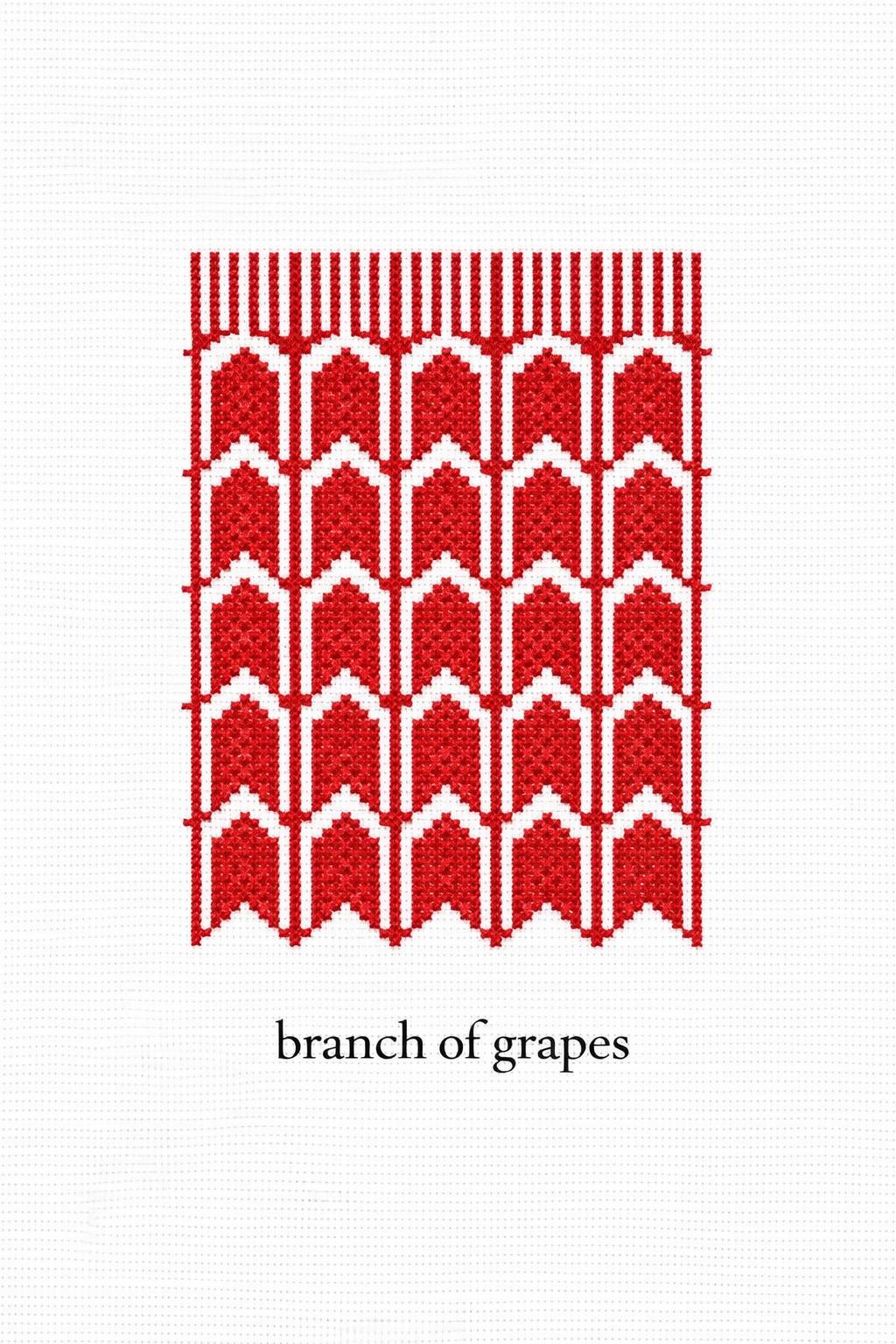


Regional Use
Historical pattern archives document apple-related motifs in Palestinian embroidery, including examples connected to Hebron and others used across multiple areas.
See the map of Palestinian thobes by region
See where each Palestinian thobe originates across the regions of Palestine.
Open the Map