
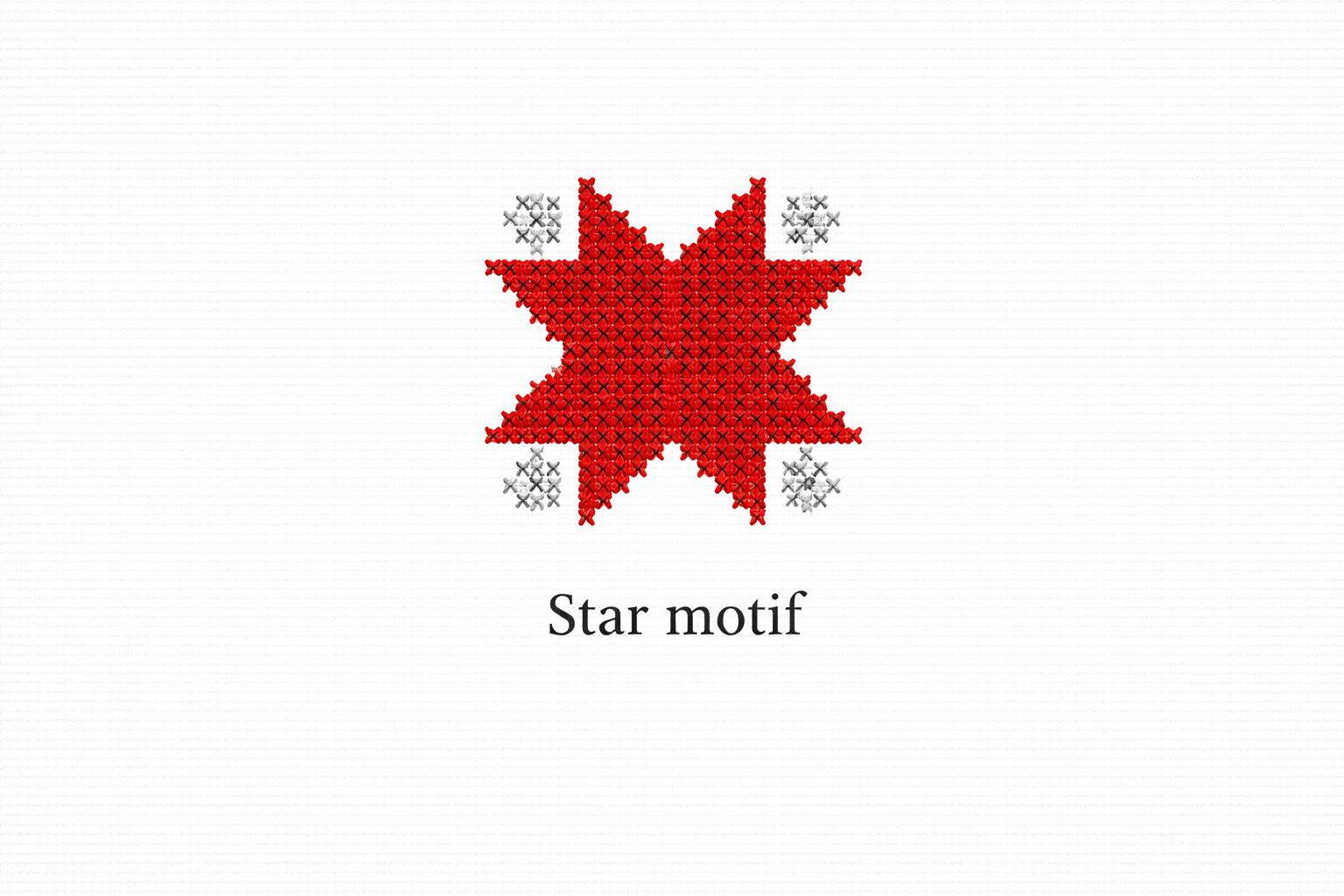
The Star motif in Palestinian Tatreez is one of the geometric designs found in traditional Palestinian embroidery. Moreover, it appears as a balanced form closely tied to the visual structure of the Palestinian thobe.
Star Motif in Palestinian Tatreez: Protection and Blessing
In many embroidery traditions across the Levant and the Middle East, star shapes were believed to function as protective motifs. Because of their balanced and symmetrical form, stars were thought to help ward off harm or envy.For this reason, star motifs sometimes appear near important areas of the Palestinian thobe, such as the chest panel or neckline.
In Arab cultural traditions, stars are closely associated with guidance and orientation. Historically, stars helped people navigate landscapes and determine seasons.
In visual culture, this connection transformed the star into a symbol of direction, stability, and cosmic order.
Geometric and Artistic Influence
Star patterns with eight or more points are common in Islamic geometric art, especially in architectural decoration found in cities such as Jerusalem, Bethlehem, and Hebron.
These geometric traditions influenced local crafts, including Palestinian Tatreez, where similar star forms appear within embroidered compositions. To place this motif within the wider context of regional dress, readers can explore Palestinian thobes by region.

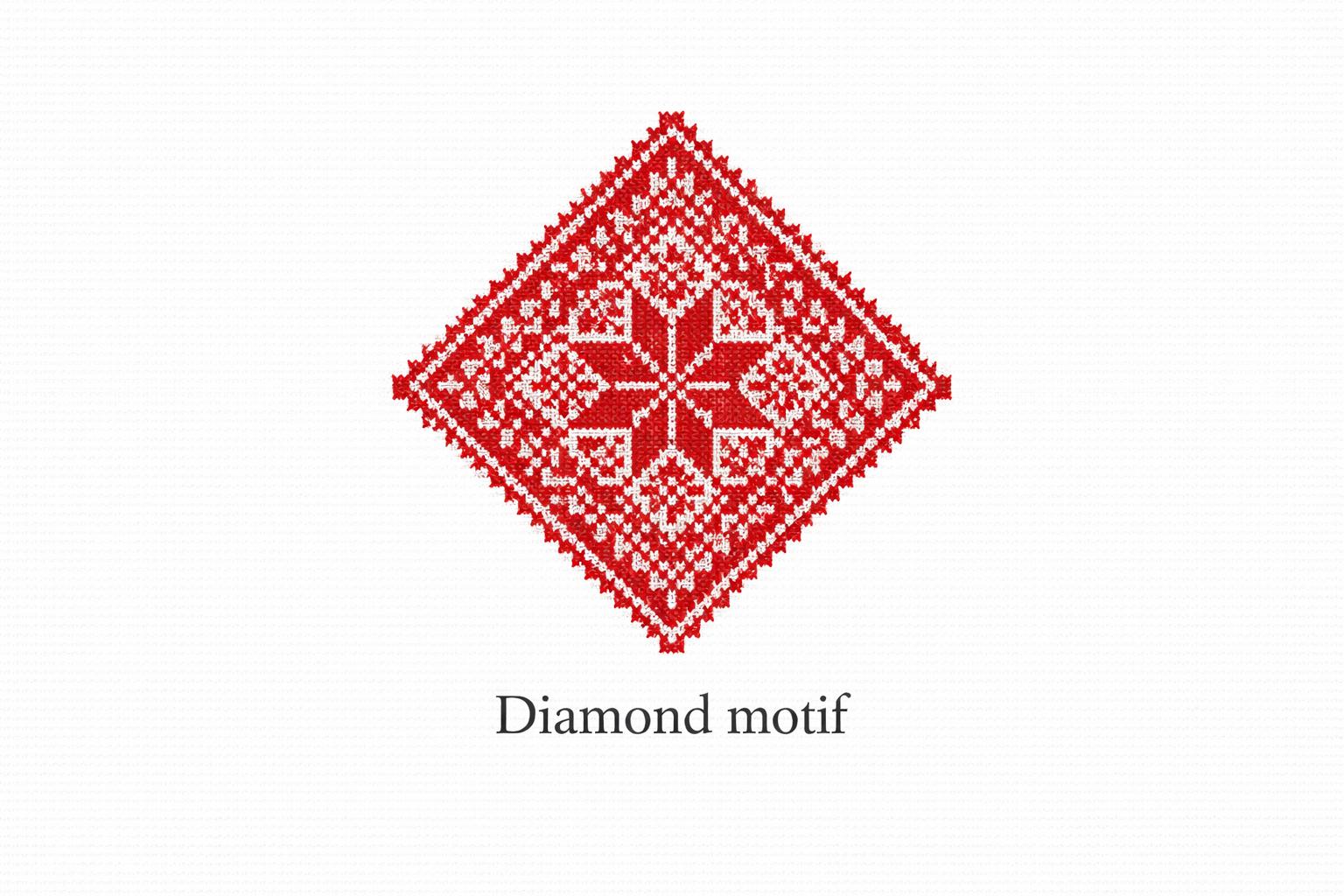
Design Function in Tatreez
Beyond symbolism, the star motif also helps organize embroidery designs. Its radiating structure connects surrounding patterns such as diamonds and floral motifs, making it a central element in many traditional Palestinian embroidery compositions.
Explore the Map of Traditional Palestinian Thobes
See where each Palestinian thobe originates across the regions of Palestine.
Open the MapSources
UNESCO — Art of Embroidery in Palestine
PalQuest — Palestinian Embroidery
p>Shelagh Weir. Palestinian Costume. British Museum Publications, 1989.Widad Kawar & Margaret B. Skinner. Threads of Identity: Preserving Palestinian Costume and Heritage.
Institute for Palestine Studies — Research on Palestinian Dress and Embroidery