
Daily Life in Historical Palestinian Villages
Palestinian villages historically formed the foundation of social, cultural, and economic life across the region. For centuries, these rural communities were centers of agricultural production, family life, and cultural traditions that shaped the daily experiences of their residents.
Daily life in historical Palestinian villages was closely connected to the land. Agriculture, food preparation, craftsmanship, and communal activities were essential aspects of everyday living. These practices not only provided sustenance but also reinforced social bonds and cultural continuity.
Understanding daily life in historical Palestinian villages offers insight into the cultural heritage and traditions that continue to influence Palestinian society today.

Village Architecture and Homes
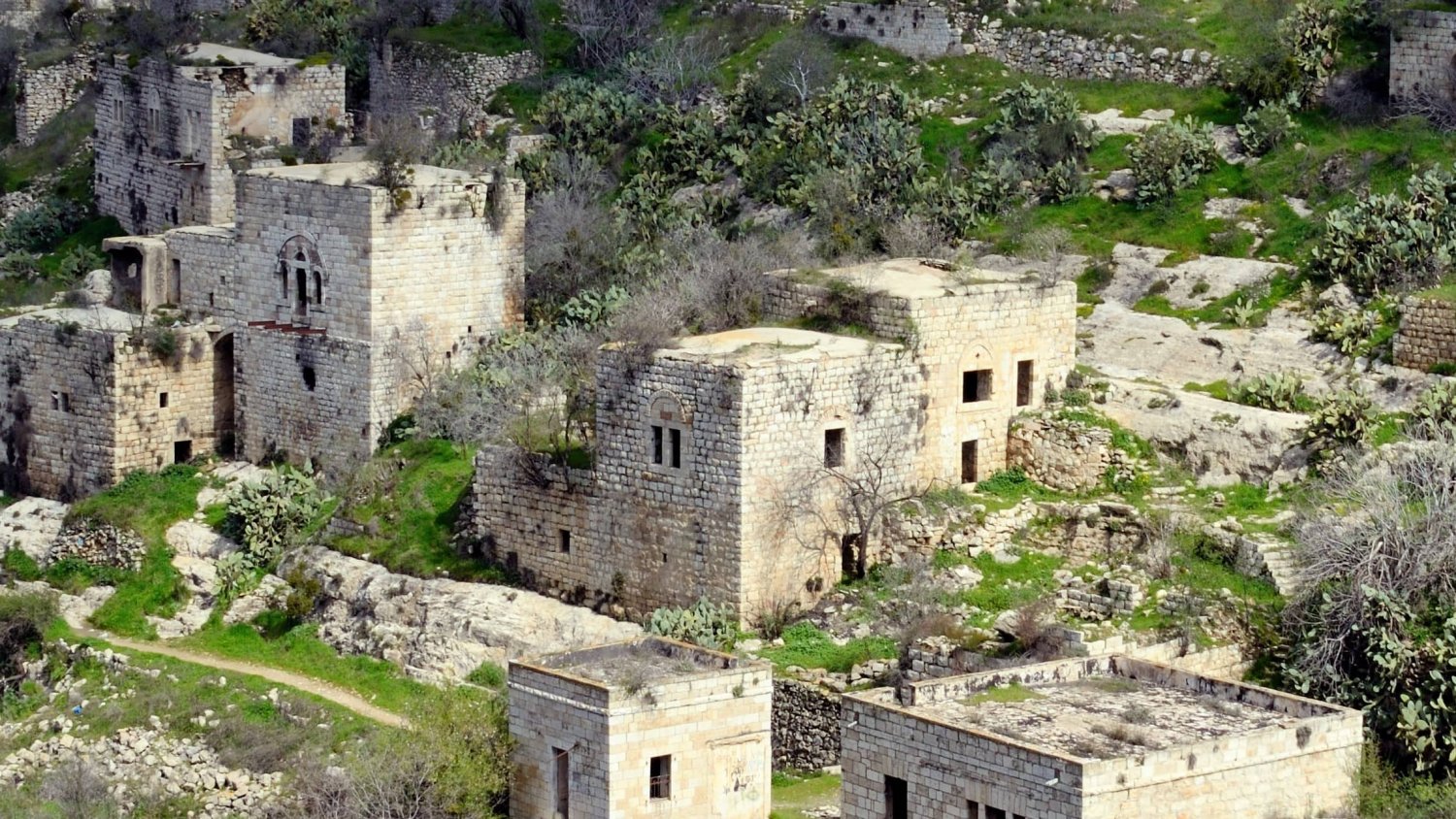
Traditional Palestinian villages were typically built using locally sourced stone and natural materials. Houses were constructed to suit the Mediterranean climate, with thick walls that helped maintain cool temperatures during hot summers and warmth during the winter months.
Village homes often included small courtyards that served as multipurpose spaces. Families used these areas for cooking, storing food, drying agricultural products, and social gatherings. Courtyards also allowed neighbors and relatives to interact frequently, strengthening the sense of community.
The architectural layout of villages reflected social structures. Homes were usually built close together, forming clusters that represented extended family groups. Narrow pathways connected houses, wells, and communal spaces, creating a network that supported daily social interactions.
Village architecture therefore reflected both practical needs and cultural values, emphasizing cooperation, family relationships, and shared resources.

Agriculture and Work in the Villages
Agriculture was the central pillar of village life in historical Palestine. Most families relied on farming as their primary source of income and food. The fertile Mediterranean landscape allowed villagers to cultivate a variety of crops including wheat, barley, olives, grapes, figs, and almonds.
Among these crops, olive trees held particular importance. Olive cultivation had deep historical roots in the region and provided essential products such as olive oil, which was used for cooking, lighting, and trade. The olive harvest season was often a communal activity in which entire families participated.
Agricultural work followed seasonal cycles. Planting, irrigation, pruning, and harvesting required knowledge that was passed down through generations. Techniques such as hillside terracing helped maximize farmland in mountainous regions while preventing soil erosion.
Village economies were therefore deeply connected to agriculture, and the rhythms of farming shaped daily schedules and community cooperation.

Family and Social Life
Family structures played a central role in the organization of village society. Extended families often lived in close proximity, creating strong networks of support and cooperation. Elders held respected positions in the community and were often consulted in decision-making and conflict resolution.
Daily life involved shared responsibilities among family members. Women managed household tasks such as cooking, food preservation, and textile production, while men often worked in farming, construction, or trade. Children also contributed to family work, helping with agricultural tasks or household chores.
Social life in villages was characterized by regular interaction among neighbors and relatives. Evening gatherings, storytelling, and shared meals were common activities that strengthened communal ties.
Hospitality was another defining feature of village culture. Visitors were welcomed warmly and offered coffee, tea, or food as a sign of respect and generosity.
Traditional Crafts and Village Economy
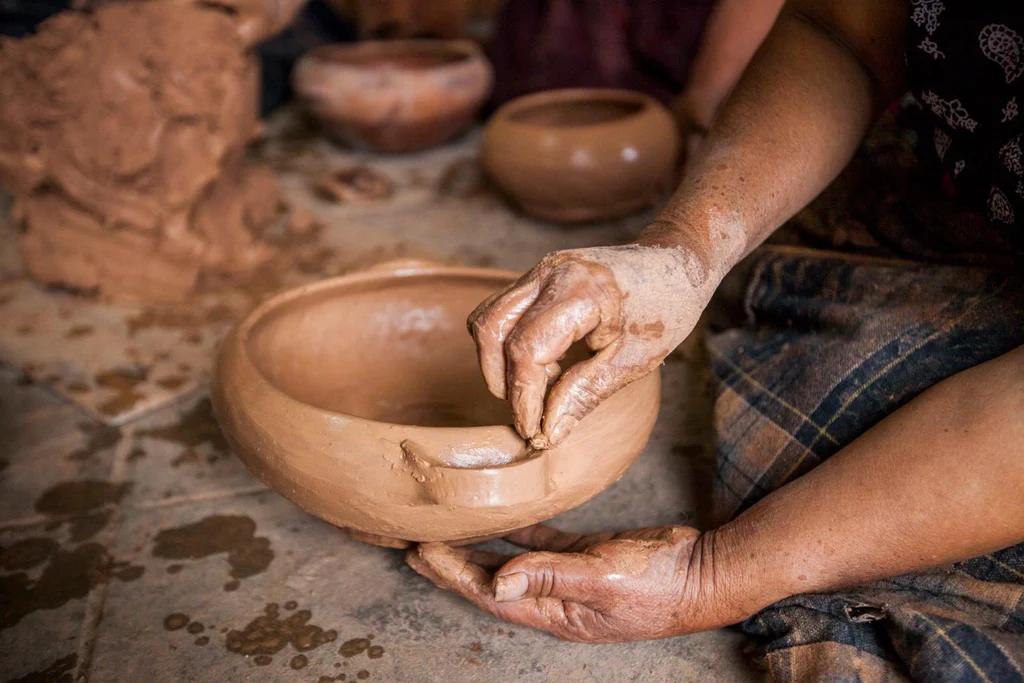
In addition to agriculture, traditional crafts played an important role in the village economy. Many households produced goods that were used locally or traded in nearby markets.
Women were often responsible for weaving textiles and producing embroidered garments. Palestinian embroidery, known as tatreez, was not only decorative but also reflected regional identity and cultural symbolism.
Men frequently worked as carpenters, blacksmiths, or potters, producing tools, household items, and farming equipment. These crafts supported daily life while also contributing to local trade networks.
Markets in nearby towns allowed villagers to exchange agricultural products and handcrafted goods. Through these economic exchanges, rural communities maintained connections with urban centers.
Food and Culinary Traditions
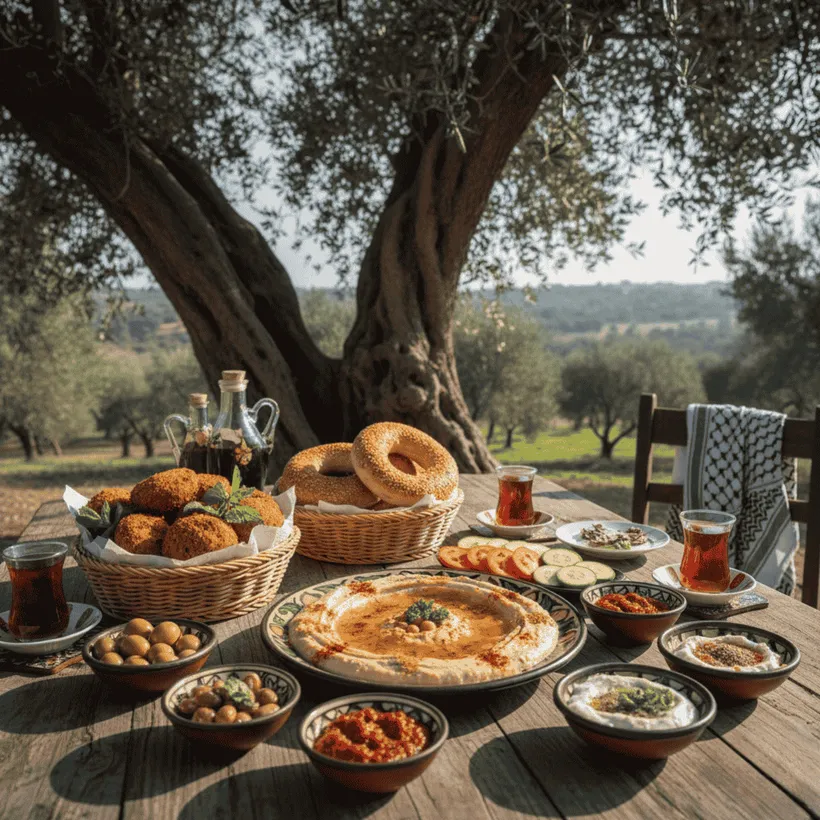
Food preparation was an essential part of daily life in Palestinian villages. Meals were typically prepared using locally grown ingredients such as grains, vegetables, herbs, and olive oil.
Bread was a staple food and was often baked fresh each day in communal or household ovens. Olive oil was widely used in cooking and served as a key ingredient in many traditional dishes.
Village meals commonly included simple but nutritious foods such as lentils, yogurt, vegetables, olives, and bread dipped in olive oil. Seasonal fruits and herbs also played a role in everyday cooking.
Food was usually shared among family members and sometimes with neighbors, reinforcing social bonds within the community.

Community Celebrations and Cultural Traditions
Despite the demanding nature of agricultural work, village life included many moments of celebration and cultural expression. Weddings, religious holidays, and harvest festivals were important events that brought communities together.
Music, singing, and traditional dances were often part of these celebrations. One of the most well-known dances performed during celebrations was Dabke, a group dance characterized by rhythmic footwork and coordinated movement.
These gatherings allowed villagers to share stories, maintain traditions, and strengthen collective identity. Celebrations also provided opportunities for younger generations to learn cultural practices from elders.
Preserving the Memory of Palestinian Village Life
Today, historians and cultural institutions work to preserve knowledge about historical Palestinian villages and their way of life. Oral histories, photographs, and written accounts provide valuable insights into the traditions that once shaped these communities.
Museums, cultural organizations, and academic researchers document village architecture, agricultural practices, crafts, and social customs. These efforts help ensure that the cultural heritage of Palestinian villages remains part of collective memory.
Understanding daily life in historical Palestinian villages highlights the resilience and continuity of Palestinian culture. The traditions, skills, and social values developed in these communities continue to influence Palestinian identity and cultural practices today.
Sources
All That Remains: The Palestinian Villages Occupied and Depopulated by Israel in 1948 – Walid Khalidi, 1992.
Palestinian Society and Culture – Samih Farsoun & Christina Zacharia, 2007.
Palestinian Village Histories: Geographies of the Displaced – Rochelle Davis, 2011.
Palestinian Identity: The Construction of Modern National Consciousness – Rashid Khalidi, 1997.
Publications of the Palestinian Ministry of Culture.
Cultural heritage reports by UNESCO.
Palestinian Ministry of Culture: https://moc.pna.ps/
UNESCO Intangible Cultural Heritage: https://ich.unesco.org/
Walid Khalidi – All That Remains: https://www.ucpress.edu/book/9780887282249/all-that-remains
Rashid Khalidi – Palestinian Identity: https://cup.columbia.edu/book/palestinian-identity/9780231105156
Rochelle Davis – Palestinian Village Histories: https://www.sup.org/books/title/?id=19463